
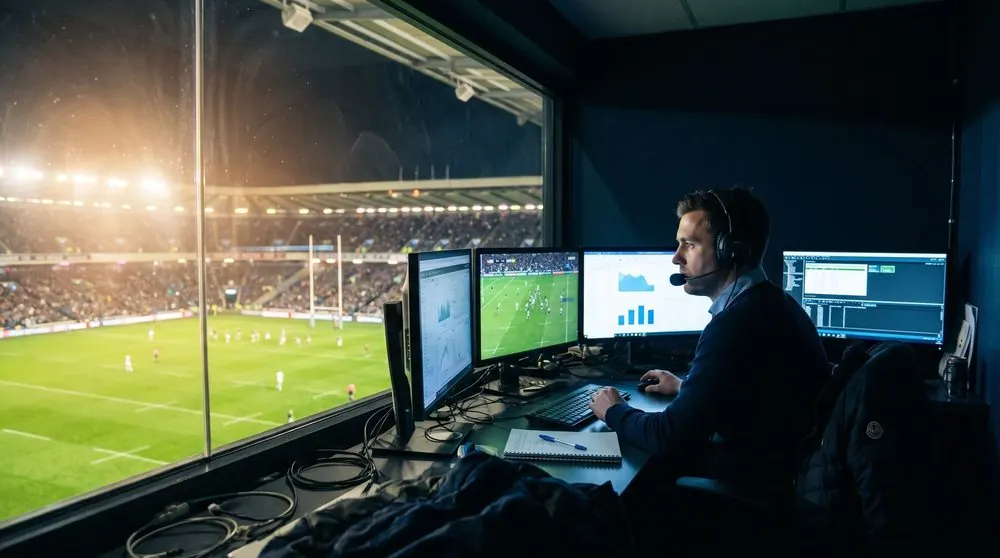
What the job involves
Analysts sit between the data and the coach. Their work is useful only when the people who make decisions understand it quickly.
- Tagging and coding matches in video analysis software
- Analysing the event and tracking data from matches
- Preparing opposition reports before a fixture
- Writing the post-match reports that coaches read
- Supporting athlete development and recruitment
A typical week
The week usually follows the fixture list. Early in the week the focus is on reviewing the last match and preparing clips. Mid-week brings opposition work and training support. Match day brings capture, live coding and a fast debrief.
Skills that matter
- Knowing the sport well enough to see what matters
- Video tagging and editing clips coaches can use
- Working with data in spreadsheets or a language such as Python
- Explaining findings simply to coaches and athletes
- Handling data and video ethically and securely
Where performance analysts work
Clubs, national teams, academies, federations, universities and analytics companies all employ analysts. Smaller teams may have one person covering video, data and reports, while larger ones split the work across a department.
How to get into the role
- Analyse matches and write the reports a coach would want
- Learn the standard tools for video analysis and data
- Look for entry roles such as match data assistant or placements
- Build a portfolio of reports that someone can read in minutes
Read what a good post-match report looks like before you write your first one.
Where the 2403 Academy fits
The 2403 Performance Academy covers filming and capture, video analysis and coding, data and analytics, opposition and scouting and communicating insight. You practise on real footage in the app and finish with project work for your portfolio.