
What the job involves
Sponsorship managers work on the commercial side of sport. They connect a property, such as a team or a tournament, with brands that want to reach its audience.
- Researching brands that fit the property and its fans
- Building packages of rights and pricing them
- Pitching to brands and negotiating agreements
- Planning activations together with each partner
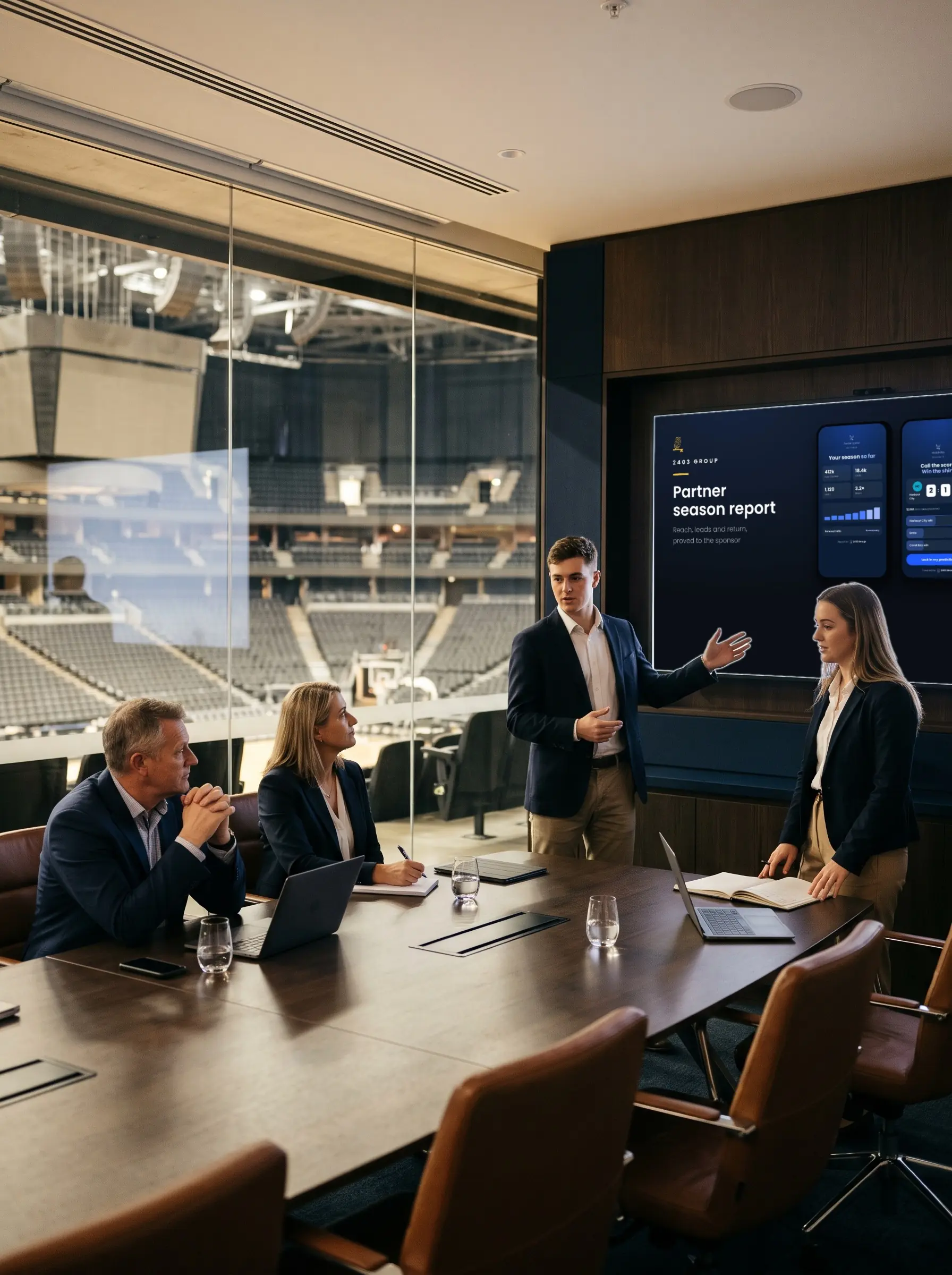
- Reporting results so that renewal is an easy yes
A typical week
The mix changes through the season. Some weeks are mostly prospecting and proposals. Others are mostly delivery: briefing the team, checking that a partner’s logo is where it should be and preparing a report for a partner meeting. Matchdays and event days often bring evening and weekend work.
Skills that matter
- Knowing what a brand wants and what a right is worth
- Writing proposals and presenting them clearly
- Comfort with spreadsheets and simple data
- Building relationships and keeping promises
- Planning projects with many moving parts
Where sponsorship managers work
Most work for rights holders such as clubs, leagues, federations and event organisers. Others work in agencies that sell or activate sponsorship or in the sponsorship teams of brands. Job titles vary a great deal between organisations, so read what a role involves rather than relying on the title.
How to get into the role
Few people start as a sponsorship manager. A common route is to begin in a related role such as a partnerships coordinator, sales, marketing or membership role and move across as you show results.
- Learn how rights are valued and packaged
- Keep a sample proposal for a property you follow in a portfolio
- Get experience on live work, even if it is voluntary or short term
- Meet people who already work in sport commercial teams
Our guide to how to get a job in sport covers the wider picture.
Where the 2403 Academy fits
The 2403 Commercial Academy teaches sponsorship, media rights and licensing and activation and partner value, then applies them on live projects such as pricing a front-of-shirt partnership. You finish with project work that you can show to an employer.